Saturday, August 27, 2022

MALAYSIA – A RISING NAME IN HEALTHCARE TRAVEL

Healthcare and Wellness Options for Young and Old

Malaysia is fast gaining popularity and is a much sought after destination for medical tourism in the world today.  Recently declared winner of the International Medical Travel Journal’s “Destination of the Year 2015”, the Malaysia Healthcare Travel Council is currently promoting the country’s healthcare and wellness offerings.


Providing a series of product packages catered for both the young and seniors, Malaysia Healthcare’s latest promotional plan is to attract more healthcare travellers to the country. Treatment focused for retirees such as orthopaedic and dental as well as health screening options streamlined according to age is available.

Malaysia is well-known for its unique offering of high quality care, ease of accessibility and competitive pricing with further advantage of having its healthcare travel supported by its government under the purview of the Ministry of Health.  Internationally, Malaysia received more than 800,000 healthcare travellers in 2014.  Other popular treatments sought are in ophthalmology and bariatric surgery.

Malaysia offers an efficient and comprehensive healthcare system consisting of both a government-run universal healthcare system and a co-existing private healthcare system with the engagement of both the private and public sector. It is testament to the thriving industry that Malaysian private healthcare facilities recently won numerous awards presented during the IMTJ Medical Travel Awards 2015 held in earlier this year.
Malaysia obligates strict regulatory guidelines for medical offerings ensuring quality care combined with the commitment and backing of its Government, strong public-private sector partnerships and the unwavering support of its people in providing the warm Malaysian hospitality.
Medical Tourism specialist in Sydney Tony Benner, said “In Malaysia, practically everyone speaks English. They have what it takes to compete against the world’s best in healthcare travel with its numerous medical and wellness offerings today. What’s more, Malaysia’s healthcare services offer quality care for peace of mind.


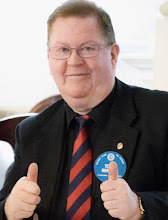
Tony Benner
Oze Travel Representation
+61 407 366 140 | ozetravel@ozetravelrep.com 

Friday, July 2, 2021

Auspiciousness of Food at Chinese New Year

In Chinese culture, food is given a lot of importance and plays a vital role during the Chinese New Year (CNY) season.
Richard Poi, Oze Travel Representation

From the food prepared on the CNY Reunion Dinner through to the fifteenth day of the CNY celebrations (Chap Goh Meh), "lucky" foods are served throughout the two week celebration. Examples are noodles representing a long life (never cut them for obvious reason!); Spring Rolls symbolising wealth because of their shape being similar to gold bars; Clams resembling the bullion.

Foods may have special significance because of the way the Chinese word for it sounds. For example, the Cantonese word for lettuce sounds like rising fortune; Tangerines and oranges sound like luck and wealth, respectively.

There are other auspicious sounding ingredients that "add luck" to the dish (and to the person who consumes it!), like shitake mushrooms, abalone, roast pork with crackling intact, and black hair-like moss (cyanobacterium, in dried form but expands when wet) known as 'fatt choy' in Chinese which sounds like "expanding wealth". 

Fish also plays a large role in festive celebrations because the word, fish, being "yu," sounds like the words both for wish and abundance. This explains why the raw fish salad is a popular front runner dish at some CNY banquets (especially in Malaysia and Singapore) because it encourages diners to pick up their chopsticks and mix all the ingredients of the dish together - the significance of collaboration in the pursuit of wealth and prosperity.

Isn't "Yu Sang" a relevant dish to have for networkers?

Richard Poi is also a Sydney-based Lecturer at Western Sydney University.

Labels: , , , , ,

Tuesday, December 3, 2019

Hotel or Hospital? Spot the Difference!

It could be any upmarket hotel.  A retired Australian couple wander through the main atrium, suitcases in one hand, travel guides in the other. A concierge sits at the entrance, offering information on sightseeing and shopping. Room rates are posted on the front counter, boasting views of the glittering Petronas Towers and the lush greens of the Royal Selangor Golf Club.

Except it's not a hotel - it's Prince Court Medical Centre, one of the jewels in the crown of Malaysia's burgeoning medical tourism sector. The luxurious, 277-bed private hospital is one of almost 80 healthcare facilities endorsed by the Malaysia Healthcare Travel Council, an agency set up by the Ministry of Health in 2009 to promote Malaysia to foreign patients.


It appears to be working. Malaysia was recently proclaimed the top medical travel destination by the International Medical Travel Journal. 

They come for all sorts of procedures - cosmetic, dentistry, orthopedics, cardiology, weight loss. Prince Court is particularly known for its plastic reconstructive services. The hospital was established by Petronas, Malaysia's national oil and gas company, in 2007, and developed a sophisticated burns unit to treat the injuries of its workers.

These days, patients are more likely to come from overseas than the oil rigs. For two years in a row, Prince Court has been named the best hospital in the world by the Medical Travel Quality Alliance. It has its own business lounge for international patients, where multilingual staff can help book appointments and sort out visa extensions. 

Prince Court Medical Centre is one of the Malaysia Healthcare Travel Council's elite members.

Dr Yap Lok Huei is one of Prince Court's consultant plastic surgeons. He was trained in Ireland and Hong Kong, and spent 25 years working overseas. Before Prince Court, he was with the National Health Service in the United Kingdom.

Google his name, and reviews from patients come up on cosmetic surgery websites and forums. He has worked on the breasts, tummies and faces of women from all over the world.
Dr Yap is somewhat reluctant to be seen as an advocate for medical tourism, describing it as an "accidental geopolitical situation" that the difference in currency values allows foreign patients to get elective procedures in Malaysia for less than in their home countries.  But Dr Yap would rather his services be described as "cost-effective" than cheap.

"We are doctors first, and maybe businessmen second."

Thanks to: Siobhan Downes, www.stuff.co.nz 
OZE TRAVEL REPRESENTATION.  

Labels: , , , , ,

Thursday, November 21, 2019

THE WORLD'S NEW MEDICAL TOURISM PARADISE

Kevin Wyatt stretched out on sparkling white sheets, gazing at the palm trees outside his
Sherene Azli,and Richard Poi.
room in sunny Kuala Lumpur. After a long international flight, Wyatt, an avid cyclist from South Carolina, was eager to roam the sprawling city’s Chinatown and chow down on steaming nasi lemak during a 13-day stay in Malaysia’s glitzy capital. But first there was a bit of business to attend to: His spotless suite was actually an operating room, his comfy bed a gurney. The first stop on his tourist itinerary in this tropical locale was a hospital, to go under the knife for a replacement knee. The cost: $5,000 less than he would have paid at home, even including airfare and wellness-resort stays.

Wyatt is just one of thousands of surgery-seeking vacationers who have packed their bags for Malaysia in recent years. Medical tourism is a booming business in the small Southeast Asian country of space-age skyscrapers and six-story shopping malls. In the last 10 years, as health care costs have risen and the world’s population has grown older, Malaysia’s industry has swelled tenfold to $180 million as people from across the globe have flocked there to get a piece of the country’s cheap, quality health care. According to the International Medical Travel Journal, it’s the top medical travel “destination of the year,” and the industry in Malaysia is forecast to grow by 15 percent annually. It’s just a slice of the growing global medical tourism pie that’s worth up to $55 billion, with 11 million cross-border patients worldwide, according to Patients Beyond Borders.

“It’s not about cutting corners. It’s not about compromising. It’s not about shortchanging anyone.”

That’s thanks to the country’s rock-bottom property and real estate prices, English-speaking physicians and plethora of medical-device manufacturers. Singapore and Thailand, once thriving medical havens for budget-conscious patients, are struggling to compete due to rising prices and lagging infrastructure. Moreover, as Ara Damansara Medical Centre CEO Sue Lee explains, Malaysia is banking on the region’s growing gray tsunami — by 2050, the number of people 60 and older will triple in Southeast Asia. “Anti-aging treatments and fix-me-ups,” like hip replacements, cosmetic surgeries and dental work, are in high demand from the cash-strapped elderly, says Sherene Azli, the CEO of Malaysia Healthcare Travel Council.


For visitors, it’s like booking an all-inclusive vacation package, with the added bonus of a face-lift or new dentures. The Malaysia Healthcare Travel Council offers a $700 deal for a city tour, a four-night hotel stay at the Shangri-La Hotel in Kuala Lumpur and an executive health screening. “It’s an end-to-end service,” explains Azli. In Wyatt’s case, his medical journey in 2013 included a private limousine that whisked him to the airport, a stay for him and his wife at the Club Saujana Resort and an executive suite hospital room that offered a garden balcony with twice-a-day tea service. There are even designated lounges and ambulance bays for medical tourists at the international airports in Kuala Lumpur and Penang. Malaysia is a “hidden [health care] gem” that delivers “peace of mind,” says Azli.

It can be hard to keep anxiety at bay, though, when you’re undergoing a procedure thousands of miles away from home, says Keith Pollard, a medical tourism maven in London who publishes the International Medical Travel Journal. Going abroad for medical treatment is not a lighthearted decision for most patients, he says; most actually have no other option — it’s a “last resort.” “The biggest barrier is fear of the unknown, fear of something going wrong, fear that they won’t understand me,” he says. Nobody wants poorly trained doctors who haphazardly slice and dice in a developing country. When treatment turns sour, medical malpractice suits are hard to navigate in foreign lands.

But take a chill pill, says Azli: “It’s not about cutting corners. It’s not about compromising. It’s not about short-changing anyone.” Unlike in many other established medical tourism destinations, the Malaysian government works hand in hand with the country’s medical sector to keep things on the up and up. It has tax breaks for hospitals to upgrade their equipment, relaxed visa restrictions for inbound medical tourists and regulations that standardise the costs and quality of treatments across its hospitals. The Malaysia Healthcare Travel Council works under the auspices of the Ministry of Health, which collaborates with hotels, clinics, hospitals, insurance companies, airlines and all the other players in the medical tourism field. This public-private partnership is key to emerging medical tourism industries, since making money and healing people don’t aways coincide. Malaysia, Azli says, is “cautious to not commoditise” its health care as other countries have done.


While Malaysia’s model is no cure-all for a growing affordable health care crisis, other nations ought to take note, say health care professionals. Overseas treatments could be covered by more health insurance plans in the next few years, and countries like Malaysia want to make it easier to access cheap, top-notch health care, with the added perk of sipping mimosas beachside while recovering from surgery. One year after getting his new knee, Kevin Wyatt says, he picked up a tennis racket for the first time in nine years. “Three sets later,” he recalls proudly, he was tired, “but no worse for the wear.”

BY LESLIE NGUYEN-OKWUNOV
Tony Benner & Richard Poi
OZE TRAVEL REPRESENTATION
Medical Tourism Specialists - Malaysia 
Box Q204, QVB Post Office,
Sydney, Australia, 1230
Tel. +612 9279 1194 or 0407 366 140

Thursday, November 7, 2019

No need to Sedate your Wallet!

You have a quote for some very expensive dental treatment and you need to take a holiday.....

No need to sedate your wallet!

A solution might be to take your holiday in Malaysia and to save 70% on that dental treatment by visiting a government-registered dental hospital in Kuala Lumpur or Penang.

Malaysia is fast gaining popularity and is a much sought after destination for medical tourism in the world today.  

Medical Tourism specialist in Sydney, Tony Benner, said “In Malaysia, practically everyone speaks English. They have what it takes to compete against the world’s best in healthcare travel with its numerous medical and wellness offerings today.

Just email Richard Poi or Tony Benner at ozetravel@ozetravelrep.com if you would like more information.

Labels: , , , , , , , ,

Monday, November 4, 2019

Facing a Horror Dental Quote?

Know someone who is facing a huge dental bill and still wanting to take a holiday?

A saving of 60-70% on dental costs, and to have a great holiday in Malaysia, is an attractive option.

Malaysia is fast gaining popularity and is a much sought after destination for medical tourism in the world today.  

Medical Tourism specialist in Sydney, Tony Benner, said “In Malaysia, practically everyone speaks English. They have what it takes to compete against the world’s best in healthcare travel with its numerous medical and wellness offerings today. What’s more, Malaysia’s healthcare services offer quality care for peace of mind.

Just email Richard Poi or Tony Benner at ozetravel@ozetravelrep.com if you would like more information.

Labels: , , , , , , , ,

Sunday, April 21, 2019

Malaysia to be Asia’s Fertility Treatment Hub By 2020

Malaysia is capable of becoming Asia’s fertility treatment hub by 2020 due to the high-
quality health services available in the country.


Malaysia Health Tourism Council CEO Sherene Azli said the Council was working closely with the Health Ministry and private hospitals to achieve the aspiration in the next two years, while at the same time, boosting the country’s health tourism industry.

“The success rate of the In Vitro Fertilisation (IVF) treatment in Malaysia is high at between 55 to 60 per cent.

“The level of demands and the country’s capability to provide the services involved proved that Malaysia has a huge potential to be promoted as a fertility treatment hub in the region,” she said earlier this month.

​​​​​​​Sherene said ​​​​​​​efficient service and multilingual communication were also among the advantages that made Malaysia having a complete health tourism industry package.

For more information, please contact:

Oze Travel Representation, Box Q204, Sydney. 02 9279 1194 or 0407 366 140.  ozetravel@ozetravelrep.com


Labels: , , , ,